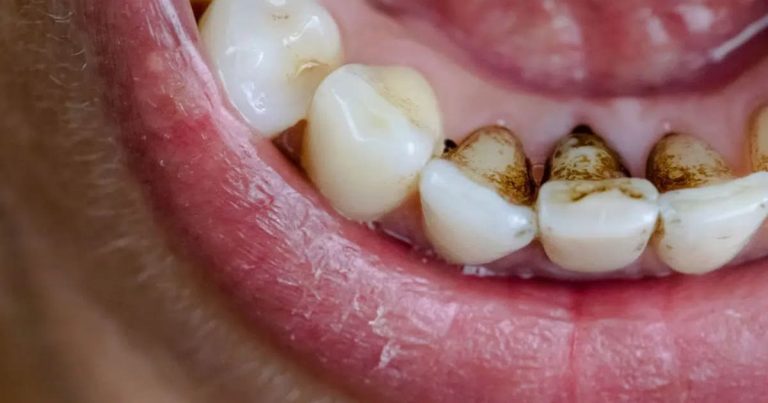
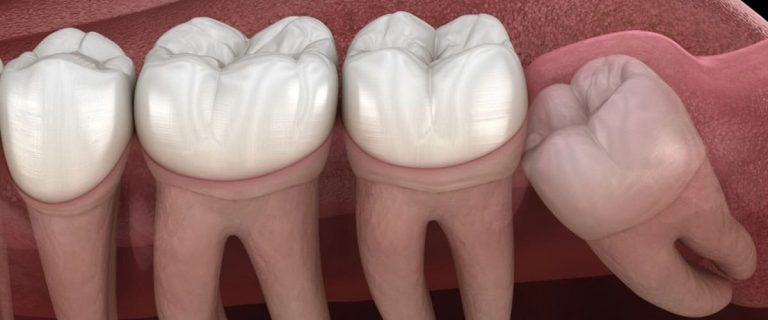
Losing a tooth for any reason is never a pleasant experience, and you definitely want to fill the gap. For this, you have two main options: dental bridges and dental implants. Which one should you choose? Well, it depends on your budget, the health of your jaw and gums, your preferences, and most importantly, what your dentist recommends based on his or her evaluations. In this article, we will examine dental bridges vs implants in Langley from various aspects, as well as their lifespan and the length of time required for treatment.
What Is a Dental Bridge? (And How It Works)
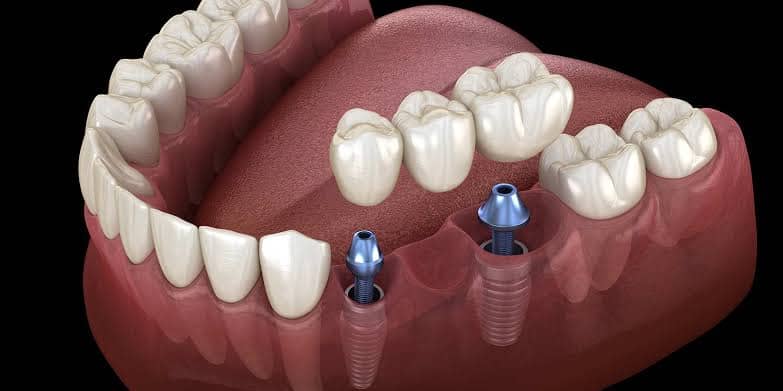
As the name suggests, a dental bridge is similar in structure to a bridge. This procedure involves two crowns that are placed over the empty space between adjacent teeth and hold a prosthetic tooth (pontic) in between. In order for the bridge to sit properly on the adjacent teeth, the dentist has to shave off some of the enamel of the healthy adjacent teeth and make them smaller.
What Are Dental Implants? A Modern Solution Explained
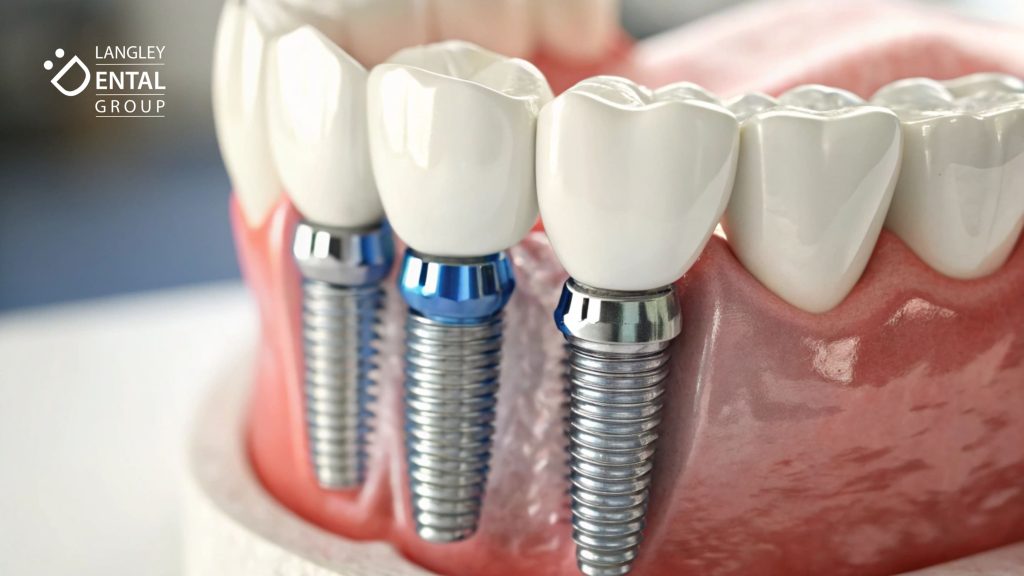
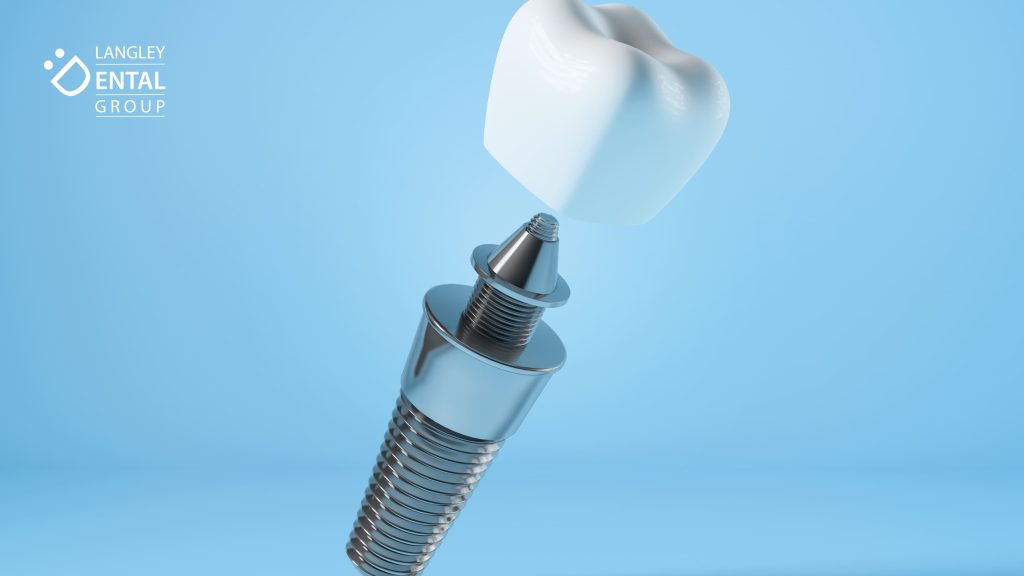
Dental implants are a durable, natural-looking replacement that fuses with the jawbone and helps maintain its health. In this procedure, a titanium post is surgically placed in the jawbone to act as the root of a missing tooth. A natural dental crown is then placed on top of it.
Unlike dental bridges, implants can be used not only for single-tooth dental implant cases but also to replace multiple adjacent missing teeth, without placing any stress on the neighboring teeth.
Dental Bridges vs Implants in Langley: A Side-by-Side Comparison
Now that you are familiar with the nature of both methods, let’s compare them in detail on key and practical factors that are important to every patient and practitioner in Langley.
| Feature | Dental Bridge | Dental Implant |
| Lifespan | 5 to 15 years (requires replacement) | Lifetime (with proper care) |
| Treatment Time | Fast (2 to 3 weeks) | Longer (3 to 6 months for osseointegration) |
| Impact on Adjacent Teeth | Requires shaving down healthy teeth | Does not affect neighboring teeth |
| Jawbone Preservation | Does not prevent bone loss | Prevents jawbone deterioration |
| Initial Cost | Lower and more affordable | Higher and more expensive |
As you can see in the table, bridges focus on faster and more cost-effective treatment, while implants focus on greater patient durability and comfort.
Durability and Longevity
The average lifespan of a dental bridge is between 5 and 15 years, and often depends on the quality of the materials and construction of the dental bridge, the patient’s oral hygiene, and the health of the underlying teeth. On the other hand, the average lifespan of a dental implant is between 20 and 30 years, and if the quality of the implant is good and the patient also maintains good oral hygiene, it can remain healthy for the rest of their lives.
Cost Comparison in Langley
Dental bridges are less expensive in the short term because the treatment process is simpler and shorter, and they do not require surgery or a titanium abutment. Most dental insurances in British Columbia also cover a large portion of it. On the other hand, implants have a high initial cost but are more economical in the long run, as they do not require frequent replacements and subsequent side costs.
Can’t Choose Between a Bridge and an Implant?
A consultation can reveal which treatment fits your oral health, budget, and the condition of your surrounding teeth. The team at My Dentist Langley is here to answer your questions and discuss your tooth replacement options.
Procedure Time and Recovery
The entire process of preparing and installing a bridge in Langley is usually completed in two or three sessions within two weeks, and there is no special recovery period. But implants are a time-consuming process. After the titanium base is implanted in the jaw, you have to wait a few months for the jawbone to heal and fuse with the new root. Therefore, the implant treatment process can take anywhere from a few months to half a year.
Impact on Neighboring Teeth
This is one of the most important differences between bridges and implants. To place a bridge, the dentist has to cut the two teeth adjacent to the missing tooth so that the bridge crowns can be placed on them. But the implant is completely independent and has nothing to do with the neighboring teeth; as a result, your natural and healthy tooth structure is completely preserved.
Maintenance and Care
Cleaning an implant is exactly like cleaning a natural tooth: regular brushing and flossing. But cleaning under a bridge is a bit more challenging. You need to use special dental floss (Super Floss) to remove food debris from under the bridge; otherwise, the underlying teeth under the bridge will decay.
Pros and Cons of Dental Bridges
To help you make a better decision, let’s take a quick look at the pros and cons of dental bridges:
Pros:
- Fast: The gap between the teeth is filled in less than a month.
- No need for surgery: If you are afraid of surgery or lack of bone density, this is a great option.
- Low initial cost: Bridges are a cheaper dental implant alternative in the short term.
Cons:
- Damage to adjacent teeth: It requires removing healthy tooth enamel.
- Limited lifespan: You will have to pay for replacement again after a few years.
- Bone loss: Since there is no root in the jaw, the jawbone in that area will be lost over time.
Pros and Cons of Dental Implants
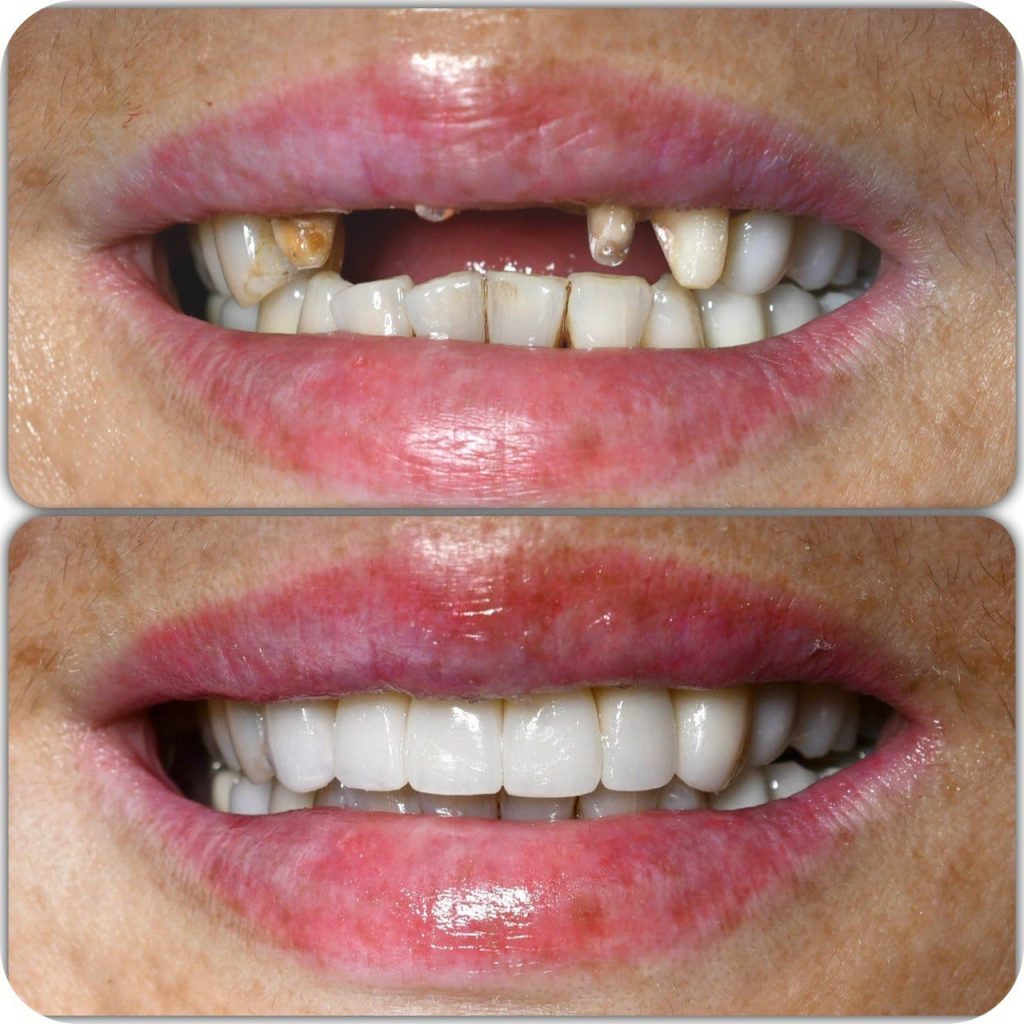
Now let’s take a look at the pros and cons of modern implant treatment:
Pros:
- Exceptional longevity: It is a permanent investment for a lifetime.
- Natural appearance and function: Gives you the strongest and most natural feeling possible when eating.
- Maintains oral health: Adjacent teeth remain intact, and the jawbone is strengthened.
Disadvantages:
- High initial cost: More expensive than bridges.
- Long process: Requires several months for the jaw to heal and fuse.
- Requires surgery: Requires prerequisite procedures (such as bone grafting) for people with certain underlying diseases or severe bone loss
Read more: Can You Get Dental Implants with Bone Loss?
Which Option Is Better for You in Langley?

The answer to this question is not the same for everyone and depends on your budget, your desires, and your doctor’s diagnosis. But as a general guide:
Is an implant better for you:
If you are in good general health, have sufficient jawbone density, have healthy adjacent teeth that you want to keep intact, and are looking for a permanent solution, implants can provide you with lifelong comfort.
Is a bridge better for you:
If your initial budget is limited or your doctor has determined that your jawbone in that area is weak and you are not a candidate for a bone graft for an implant, a bridge is a higher priority. Also, if the adjacent teeth have gaps, are filling in on their own, or need a crown, choosing a bridge is smart because you are killing two birds with one stone.
Conclusion
In conclusion, dental bridges vs implants are not mutually exclusive, and we do not expect one to be better than the other in all circumstances. Therefore, the best way to choose between a bridge and an implant is to consult with your dentist.
At My Dentist Langley, we will examine the condition of your adjacent teeth and gum health, the volume and density of your jawbone, and listen to your preferences to recommend the best option for you between implants, dental bridges, and even other possible options to fill your missing tooth.
FAQ
1. Is there an age limit for implants?
There is no age limit for adults, but people under 18 must wait until their jawbone has fully grown.
2. What is the best option if I am missing several teeth in a row?
An implant-supported bridge is usually the best choice because it eliminates pressure on your natural teeth and is highly durable.
3. Does dental insurance cover implants in Canada?
It varies by insurance; bridges are usually better covered, but you should check your plan for implants.
4. Can implants still be placed if the jawbone is weak?
Yes, in many cases, bone grafting can provide the necessary conditions for implant placement.
5. How long does it take to replace a dental bridge?
It is usually done over several sessions and around two weeks; it involves removing the old bridge, taking an impression, and installing the new bridge.
Have you been deciding between a dental bridge and an implant? Share your questions or experiences in the comments. Let others hear what influenced your choice or what you’re still unsure about.