It is no exaggeration to say that the CDCP has improved the oral health and, consequently, the quality of life of many seniors thanks to cheap and even free access to basic dental services. But does CDCP cover implants for seniors? The short answer is no; dental implants are not currently among the covered services. Nevertheless, there are still other ways to replace missing teeth and reduce the associated costs. Join us at Langley Dental Group.
Does CDCP Cover Implants for Seniors?

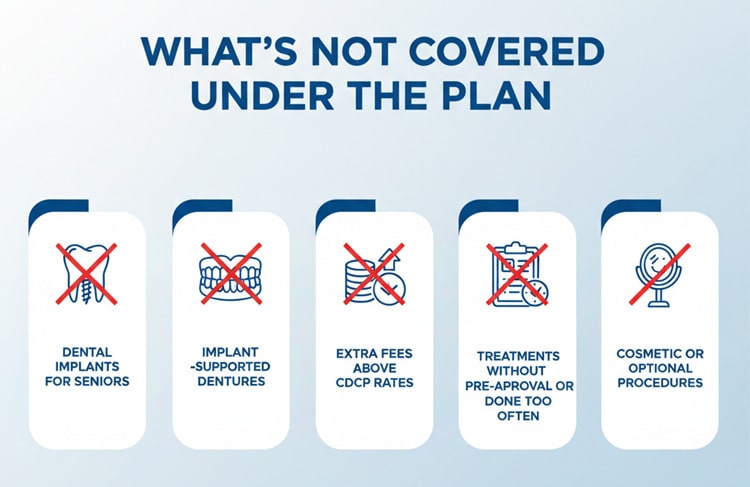
Unfortunately, no! The CDCP does not cover the cost of implants or even implant-supported prostheses for seniors. This policy applies to all age groups, including those over 65.
Even if your family falls into the lowest income bracket and is exempt from paying 100% of the costs for basic services, the full cost of dental implants is still charged at the standard private rate.
Why Aren’t Implants Covered?
The primary reason is cost. Dental implants are among the most expensive dental treatments. When the government implements a program for a very large population, it inevitably has to select services that can cover more people at a lower cost.
The second reason is that the government does not consider implants to be an “essential treatment” because it says there are cheaper solutions, such as dentures, that restore chewing function to an acceptable level.
To learn more about the covered services, you can read the post on what’s covered by the CDCP in 2026.
Are There Any Exceptions for Implants?
Currently, there are virtually no exceptions within the CDCP plan regarding coverage for dental implants. Even with a dentist’s recommendation, the system does not cover the cost of implants. Only in very rare cases outside of this plan (such as accidents and severe maxillofacial trauma) may provincial insurance or hospital surgical departments intervene, which is completely separate from the CDCP protocol.
Therefore, if you have heard promises that correspondence could secure CDCP funding for implants, it is best to remain realistic to avoid disappointment and unexpected expenses.
Need Help Choosing Between Implants and Dentures?
If CDCP won’t cover your dental implants, you may still have affordable options for replacing missing teeth. At Langley Dental Group, we can assess your teeth and explain which replacement option fits your situation and budget.
Alternatives to Dental Implants Covered by CDCP
Fortunately, the CDCP covers several alternatives to dental implants, any of which you can choose in consultation with your dentist.
1. Removable Dentures (Complete & Partial Dentures)
Removable dentures, which include both complete and partial types, are the main alternatives covered by the CDCP plan. Complete dentures are designed for individuals who have lost all teeth in one or both jaws, while partial dentures are for those who have lost one or several teeth.
2. Dental Bridges
A dental bridge is a procedure used to fill the gap left by one or more missing teeth by utilizing adjacent teeth. The surrounding teeth are slightly reshaped, and a connected artificial tooth structure is placed over them. Note that while the CDCP prioritizes removable prostheses, certain fixed restorative services and crowns may be approved under specific clinical conditions and with prior authorization.
3. Implant-Supported Dentures
Implant-Supported Dentures represent a middle ground between standard implants and conventional dentures. The dentist places two to four implants in your jaw and secures the denture onto them to ensure stability. Regarding coverage, the CDCP does not cover the implants themselves; But part of the work, namely the denture itself or some ancillary services, may be covered. Before starting treatment, ask your dentist for a written cost estimate and a coverage inquiry.
Comparing the cost of implants vs insurance-covered alternatives

Now, let’s compare dental implants and the alternatives available to seniors in terms of cost and CDCP coverage.
| Treatment | Approximate Cost in Canada (CAD) | Approximate Lifespan | CDCP Coverage |
| Full dental implant (per tooth) | Around 3,000–6,500 | 20–30+ years | ❌ Not covered |
| Dental bridge | Around 2,000–5,000 | 10–15 years | In some cases, with preauthorization |
| Complete dentures | Around 2,100–2,300 per full set | 5–10 years | ✅ Usually covered |
| Partial dentures | Around 500–2,500 | 5–10 years | ✅ Usually covered |
| Implant-supported overdenture | Around 6,000–15,000 per arch | 10–20 years | The prosthetic portion may be covered |
For a more comprehensive comparison, we recommend reading our post on dental bridges vs implants.
How Seniors Can Reduce Implant Costs in Canada

If you decide to proceed with dental implants despite the lack of CDCP coverage, there are strategies to help alleviate the financial burden:
1. Visiting Dental Schools
Reputable Canadian universities such as the University of Toronto, McGill, or UBC have teaching clinics. Treatments are performed by senior students under the direct supervision of distinguished professors, and costs are typically 30% to 50% lower than at private clinics.
2. Clinic Financing Plans
Many dental clinics partner with financial companies to offer monthly installment plans with low interest rates or even 0% interest financing options specifically for dental implants.
3. Provincial Programs and Senior Discounts
While British Columbia (BC) does not have a specific provincial program covering implants, low-income seniors can combine provincial assistance with CDCP coverage to eliminate costs for basic procedures and dentures. This allows you to allocate your entire personal budget solely to the implant surgery itself.
4. Medical Expense Tax Credit
Out-of-pocket expenses for implants qualify as medical expenses on your Canadian tax return (CRA) and can reduce your annual tax liability.
5. Smart Service Combination
You can utilize CDCP coverage for procedures such as the extraction of unsalvageable teeth, initial examinations, X-rays, and dental cleanings. This eliminates ancillary costs, allowing you to dedicate your entire personal budget exclusively to the implant surgery.
Final Thoughts
While “Does CDCP cover implants for seniors” may be a common question, the answer is currently no. While the exclusion of dental implants from the CDCP plan may be disappointing for many seniors, it is important to remember that the plan has paved the way for more affordable and highly valuable alternatives, such as removable dentures. If you are still undecided between covered dentures and implants, schedule an examination today so we can recommend the best option based on your oral health needs and budget.
FAQ
1. Does the CDCP cover the cost of initial imaging or examinations for implants?
Yes! General examinations, check-ups, and basic X-rays performed to assess overall oral health are covered by the CDCP.
2. Is it possible that implants will be added to the CDCP plan in the future?
Currently, the Canadian government has not announced any plans to include implants in the program. The system’s primary focus is on covering basic and essential services for millions of enrollees.
3. If my annual income is under $70,000, will dentures be completely free?
If your dentist accepts direct CDCP billing (assignment of benefits), then yes, you will pay nothing. However, if your clinic charges more than the government-set rate, you are responsible for paying the difference.
4. If I had an implant placed before joining the CDCP, does the plan cover the cost of repairs?
No. Even if your implant procedure was performed years ago and paid for out-of-pocket, the CDCP does not cover any ancillary services, such as screw replacement, repair of a damaged crown, or treatment for peri-implantitis (disease affecting the tissue around the implant).
5. Does the CDCP cover the cost of bone grafting for jaw preparation?
No. Additional surgeries such as bone grafting or sinus lift, which are usually a prerequisite for implant placement for seniors, are considered part of the implant protocol and are not covered.
Do you know any tips or strategies to make dental implants for seniors in Canada more affordable? Share your experiences or ideas in the comments below!