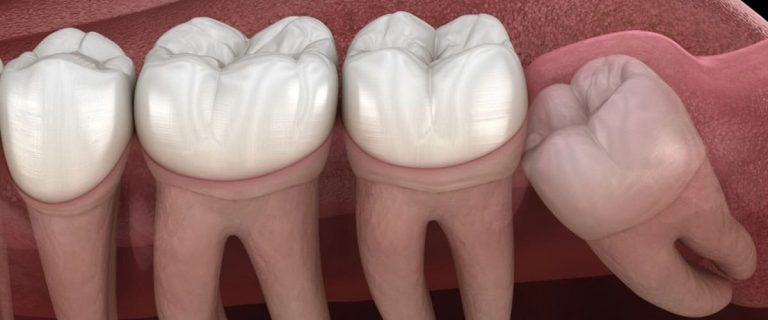
Crooked or crowded teeth can affect how you chew, speak, and feel about your smile. Clear aligners like Invisalign have become one of the most popular ways to fix that, discreet, comfortable, and effective. But there’s a big decision to make first: in-office aligners supervised by a dentist, or at-home mail-order aligners you manage yourself.
The difference comes down to more than price. It’s about safety, results, and whether a trained dentist is watching over your treatment. Here’s an honest breakdown so you can choose with confidence.
Quick answer: which is better, in-office or at-home aligners?
For most people, in-office clear aligners are the safer, more reliable choice. A dentist takes 3D scans, checks your gums and bite, and supervises every stage, which prevents the tooth-movement problems that unsupervised at-home kits can cause. At-home aligners cost less and skip the visits, but they only suit mild cases and carry real risks without professional oversight.
Not sure which fits your smile? A quick consultation gives you a clear answer. Book yours today.
What Are In-Office & At-Home Clear Aligners?
Before you decide to go for either in-office or at-home clear aligners, we will explain how each one works.
In-Office Clear Aligners
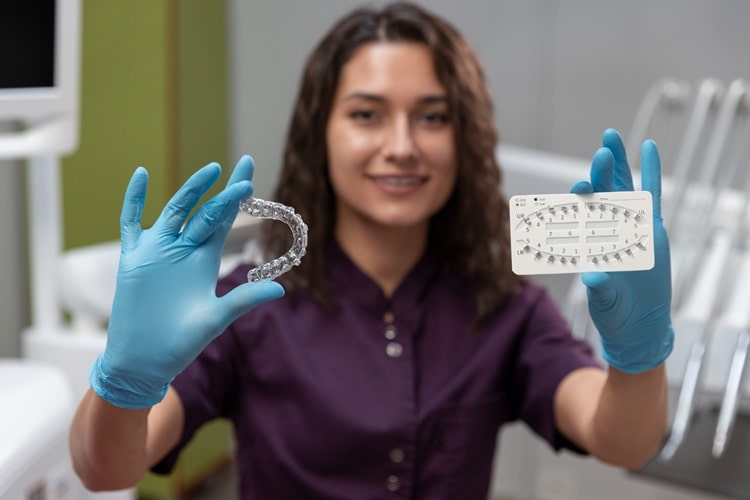
When you visit a dentist or an orthodontist for in-office clear aligners (like Invisalign), they will take a digital 3D impression of your mouth and create a customized treatment plan for your case. The dentist will supervise your treatment, and you will need follow-up appointments.
Read more: “Invisalign CDCP Coverage: Is It Covered Under the New CDCP Rules?”
At-Home Clear Aligners
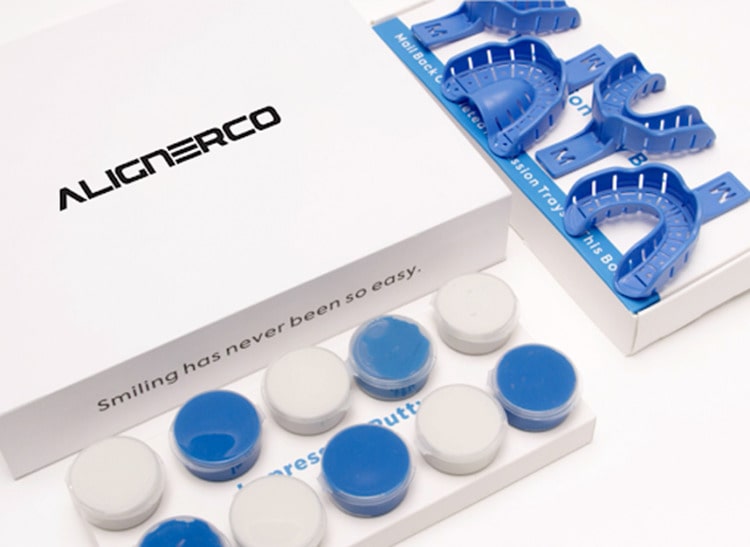
At-home or mail-order aligners are kits that come with the equipment and material to take an impression. You need to send the impression to the aligner company, so they can review it and send it to the laboratory. After approval, they will post the clear aligner to your location.
Ready to Start Your Clear Aligner Treatment?
At My Dentist Langley, our experienced dental team can evaluate your smile and guide you toward the safest and most effective orthodontic solution. Visit our homepage or contact us today and take the first step toward a straighter, healthier smile.
In-Office vs. At-Home Clear Aligners Comparison
So, to be able to answer “In-office or at-home clear aligners?”, we’ll take a look at their pros & cons, then explore their differences in detail.
| Type of Aligners | Pros | Cons |
| At-home | 🟢Less expensive🟢No dental visits🟢Results in as little as 6 months🟢24/7 access to support through an app | 🔴No professional supervision🔴Treatment could go wrong🔴No free extras🔴Only for mild to moderate cases |
| In-office | 🟢Supervised by a dentist🟢3D scans for impressions🟢Covering a wide range of issues🟢Flexible treatment plans🟢Free extras like teeth whitening and retainers | 🔴Usually the most expensive🔴Often takes 12-18 months |
Don’t know which orthodontic treatment to choose? We will help you choose the right orthodontic treatment, including braces, Invisalign, and more.
1. Treatment Prices
In-office clear aligners are more expensive, ranging from $3000 to $8000 based on the provider’s skills and location. At-home or DIY clear aligners are typically cheaper, starting as low as $1120 up to $2000.
2. Comfort
At-home clear aligners are more convenient because you buy the kit and do everything at home. With in-office clear aligners, you will have to travel to the dental clinic for regular appointments, which makes it less comfortable.
3. Supervision
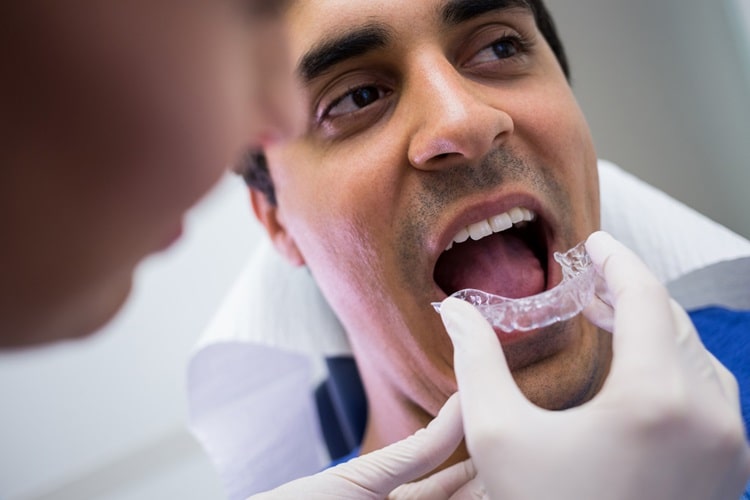
With at-home clear aligners, a dental professional will monitor your treatment remotely through an application. But for in-office aligners, you will have to regularly visit your dentist to receive adjustments and guidance.
4. Case Complexity
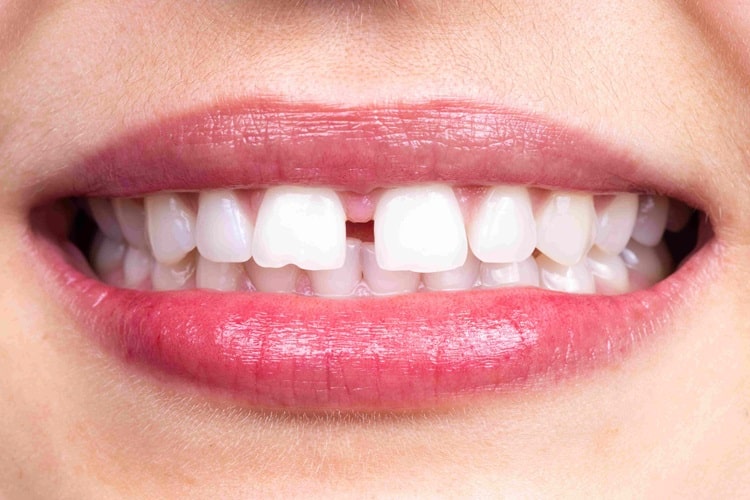
At-home clear aligners are recommended for mild to moderate cases such as crossbite, deepbite, underbite, or spacing. However, you can use in-office aligners for both simple and complex cases, like severe overbites and crossbites.
Want to learn more about the orthodontic braces treatment process? We will walk you through the entire procedure of orthodontic braces treatment.
5. Accuracy & Customization
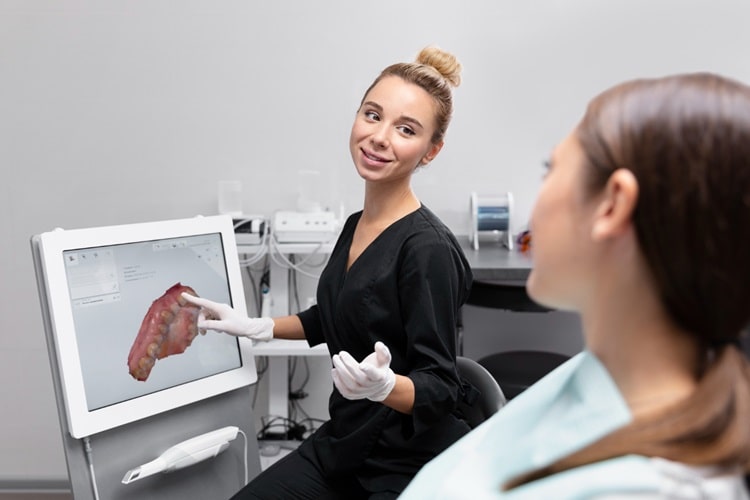
There might still be some errors when you take the impressions yourself, making at-home aligners less accurate. With in-office clear aligners, professionals use 3D scans to take digital impressions, which improves the accuracy.
Note: If you are using clear aligners, don’t forget to maintain proper teeth cleaning routines to prevent plaque buildup.
Risks of At-Home Clear Aligners
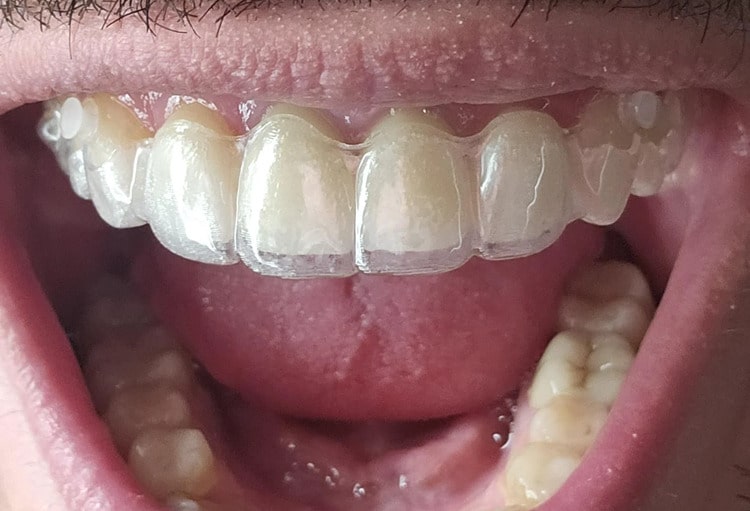
We learned that either in-office or at-home clear aligners have their pros & cons, but there are some risks that come with at-home aligners.
- They might not fit properly due to inaccuracy.
- Lack of in-person supervision can cause poor tracking or gum issues.
- They only focus on straightening teeth and don’t address other underlying problems.
Are you wondering if Invisalign fixes your smile? Let’s dive deeper into this orthodontic treatment and what dental issues it can fix.
In-Office Clear Aligners Often Come with Better Results
Now, you can choose either in-office or at-home clear aligners using the information we provided. But remember, in-office clear aligners can often give you a better outcome, as they are closely supervised by professionals. If you need orthodontic treatments such as braces or clear aligners, My Dentist Langley offers high-quality materials and advanced techniques to address complex orthodontic issues.
FAQ
How much do in-office and at-home clear aligners cost?
In-office clear aligners often range from $3000 to $8000, while at-home DIY aligners cost about $1120-$2000.
Are at-home aligners effective?
You can use them for mild to moderate cases, but don’t expect the accuracy and results you would get from in-office clear aligners like Invisalign.
Are DIY aligners safe?
They can be safe for milder cases, but they still come with risks such as poor tracking, gum issues, and not fitting properly. We recommend in-office aligners, as they are safe for most patients.
What is the 30-minute rule for clear aligners?
After eating and drinking anything except for water, wait for at least 30 minutes before putting your clear aligners back on.
Have you ever tried in-office or at-home clear aligners, or are you considering one of them? Share your experience or questions in the comments below. We’d love to hear your thoughts and help you make the right choice!