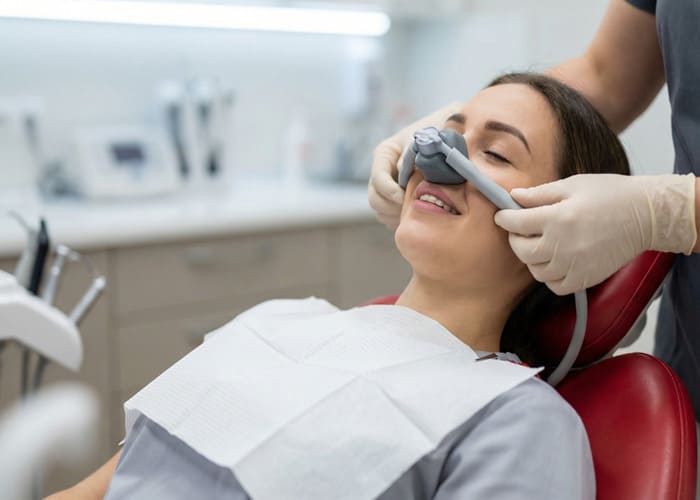
We offer oral sedation as a form of sedation dentistry. Although sedation can make the dental procedure more tolerable for you, it’s important to note that it is not a substitute for painkillers. You may still need a dental anesthetic. However, our team is committed to ensuring your experience is as comfortable as possible.
“It is going to take hours, and I cannot sit still that long.”
You are not the only one
Who Is Sedation Dentistry For?
If any of these thoughts sound like yours, oral sedation may help. It is used for people with:
Dental anxiety or fear of the dentist
A low pain tolerance
A strong gag reflex
A bad dental experience in the past
Long or complex treatment ahead
Your dentist reviews your health history and medications first, then tells you whether oral sedation is safe for you.
Oral sedation
What Is Oral Sedation, and How Does It Feel?
Oral sedation is a type of conscious sedation. You take a prescription anti-anxiety medication by mouth, usually about an hour before treatment. It calms the nervous system, so you feel relaxed and far less anxious.
Most people describe a sleepy, easy state where sounds and sensations feel far away. You do not fall fully asleep, and you can still answer your dentist. Because many patients remember little afterwards, the appointment often seems to pass quickly.
It does not replace freezing. Your tooth is still numbed with a local anesthetic, so sedation takes care of the fear and freezing takes care of the pain.
Freezing only
Freezing + oral sedation
What it does
Numbs the tooth so you do not feel pain
Calms your nerves; freezing still numbs the tooth
How you take it
A small injection in the gum
A prescription pill before treatment
Awake?
Fully awake and alert
Awake and able to respond, but very relaxed
Memory of the visit
You remember everything
Many people remember little
Drive yourself home?
Yes
No, someone must drive you
Why patients choose it
Benefits of Sedation Dentistry
01
Calm through the whole visit
Treatment you have been putting off becomes something you can sit through.
02
More done in one visit
Because you stay relaxed, your dentist can often finish more treatment in a single appointment.
03
Little memory of it
Many people remember very little, which helps the next visit feel easier.
04
Less gagging
A calmer body helps with a strong gag reflex, so treatment has fewer stops.
05
Back to regular care
Once the backlog is done, regular check-ups keep small problems small.
Ready when you are
Book a consult and ask whether oral sedation is right for you.
Oral sedation is generally safe when a trained dental professional gives it. Like any medication it has possible side effects, so your dentist checks your medical history, your medications and conditions such as heart problems or asthma before recommending it. You are monitored during the procedure.
Is sedation covered by insurance?
Every dental plan is different, so check whether yours includes sedation. You can ask for a predetermination so your insurer confirms what it pays before treatment.
Book a Calm Dental Visit in Langley, Near Willowbrook
Mention that you would like to talk about sedation when you book. Your dentist reviews your health history and plans the visit with you before any treatment.
Are you completely asleep during sedation dentistry?
Not with oral sedation. It is conscious sedation, so you stay awake and can respond to your dentist, but you feel deeply relaxed. Many people remember little of the visit.
Is oral sedation the same as sleep dentistry?
No. “Sleep dentistry” usually means deeper sedation or general anesthesia, where you are unconscious. Oral sedation keeps you awake and calm.
Is sedation dentistry painful?
Taking oral sedation is just swallowing a pill. Your dentist still numbs the tooth with a local anesthetic, so you should feel pressure rather than pain during treatment.
What happens during sedation dentistry?
You take the pill as directed, it takes effect in about 30 to 60 minutes, your tooth is frozen and treatment begins. You are monitored throughout and can talk to the team.
How long does it take to recover after dental sedation?
Expect to feel drowsy for several hours. Plan to rest for the rest of the day. Most people feel normal again by the next day.
Can I drive after oral sedation?
No. You may feel drowsy and unsteady for several hours, so someone needs to drive you home.
Can I eat or drink before oral sedation?
Your dentist gives you specific instructions about eating and drinking before your appointment. Follow them exactly.
Can I take my regular medications?
Tell your dentist about every medication and supplement you take. They decide whether oral sedation is safe with them and whether anything needs to change.
Who should not have oral sedation?
Your dentist decides after reviewing your health. Conditions such as heart problems or asthma need to be discussed first so the safest approach can be chosen.
What if I panic during treatment?
The dentist stops and helps you settle. Once you feel calm, you decide together whether to continue or finish another day.
Is sedation dentistry covered by insurance?
It depends on your plan. Ask for a predetermination so your insurer confirms what it pays. We direct bill most insurers.
Is there a sedation dentist near me in Langley?
Langley Dental Group offers oral sedation at 20487 65 Ave in Langley, a few minutes from Willowbrook Shopping Centre. We are open Monday to Friday, 9:30 AM to 6:00 PM.