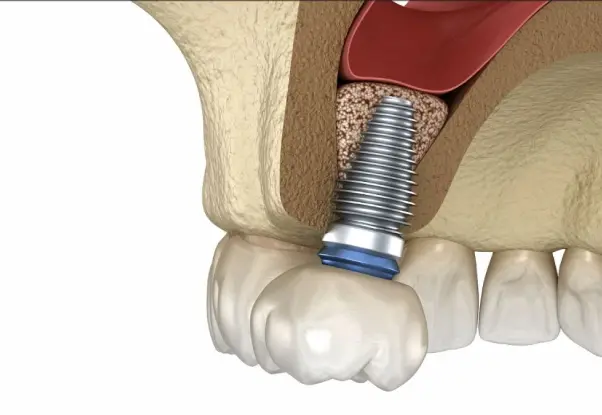
Planning a dental implant for your upper back teeth but don’t have enough bone? A sinus lift gently raises the sinus floor and adds bone to create the space a secure implant needs. It’s a routine, well-established procedure that makes implants possible even when bone height is limited.
When replacing upper back teeth with implants, one key requirement is enough bone between the jaw and the floor of the sinus, without damaging the sinus itself. If the sinus floor sits too low, it’s gently raised and the space beneath it is filled with bone graft material to create enough height for an implant. This is called a sinus lift (or sinus elevation).
The bone used can come from your own body (autogenous), from an animal source such as bovine (xenograft), or from a donor (allograft). Healing for a conventional sinus lift usually takes about 7 to 9 months, with around 4 more months afterward for the implant to integrate.
Like any surgery, a sinus lift carries some risks, though complications are uncommon:
Sinus membrane perforation. The most common issue. If it happens during surgery, the site is repaired and the sinus lift is attempted again after the membrane heals, usually a few months later.
Infection. A risk with any surgical procedure, but rare after a sinus lift.
Graft not integrating. If not enough living bone forms to support an implant, the sinus lift and bone graft may need to be repeated.
What Are the Risks of a Sinus Lift?
LDG Membership Plan
$499 /Year
2 Hygiene per year
4 Bitewing X-Rays per year.
2 Periapical X-Rays per year, Once every 5 years for Panoramic X-Ray
2 Exams per year.
2 Polishing & Fluoride per year
Free Whitening Gel on each visit
$500 Off on Implant, Invisalign and Orthodontic Services
15% Off on Restorative & basic dentistry (excludes specialty services as determined by the office)